· Cole Harmon
How to Carve Wood With a Pocket Knife (and Where It Falls Short)
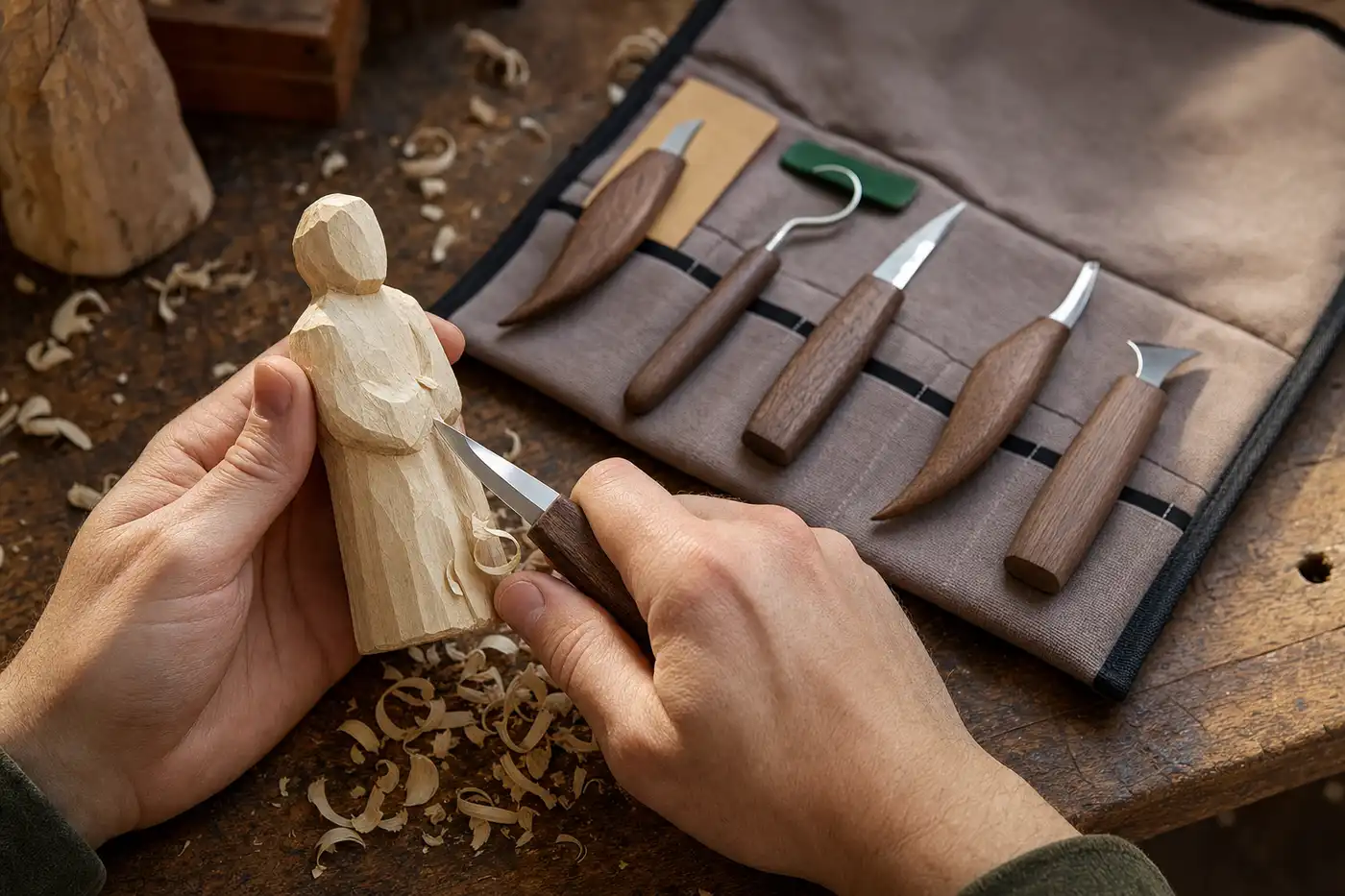
Most people who end up carving started the same way: a stick, a free afternoon, and whatever folding knife was already in a pocket. That still works. What nobody spells out is which parts of the job a folder does honestly, which it does badly, and which it will not do at all. The grips and cut types themselves are in our beginner's guide.
Can you actually carve wood with a pocket knife?
The reason a folder feels harder than a carving knife is geometry, not effort. A carving blade is ground thin behind the edge, so it parts the fibers and lets the shaving curl away. A pocket knife blade is usually thicker there, so it wedges the fibers apart before cutting them. You feel that as a stroke that stalls, or a torn face instead of a clean facet.
The second difference is the pivot. On a fixed blade the steel runs back into the handle, so a push cut sends the load straight down the tool. On a folder that load rides on a small pin and whatever lock sits behind it. Fine for an afternoon; it becomes the limit somewhere around the fortieth time you lean on the spine.
What separates a pocket knife that carves from one that fights you
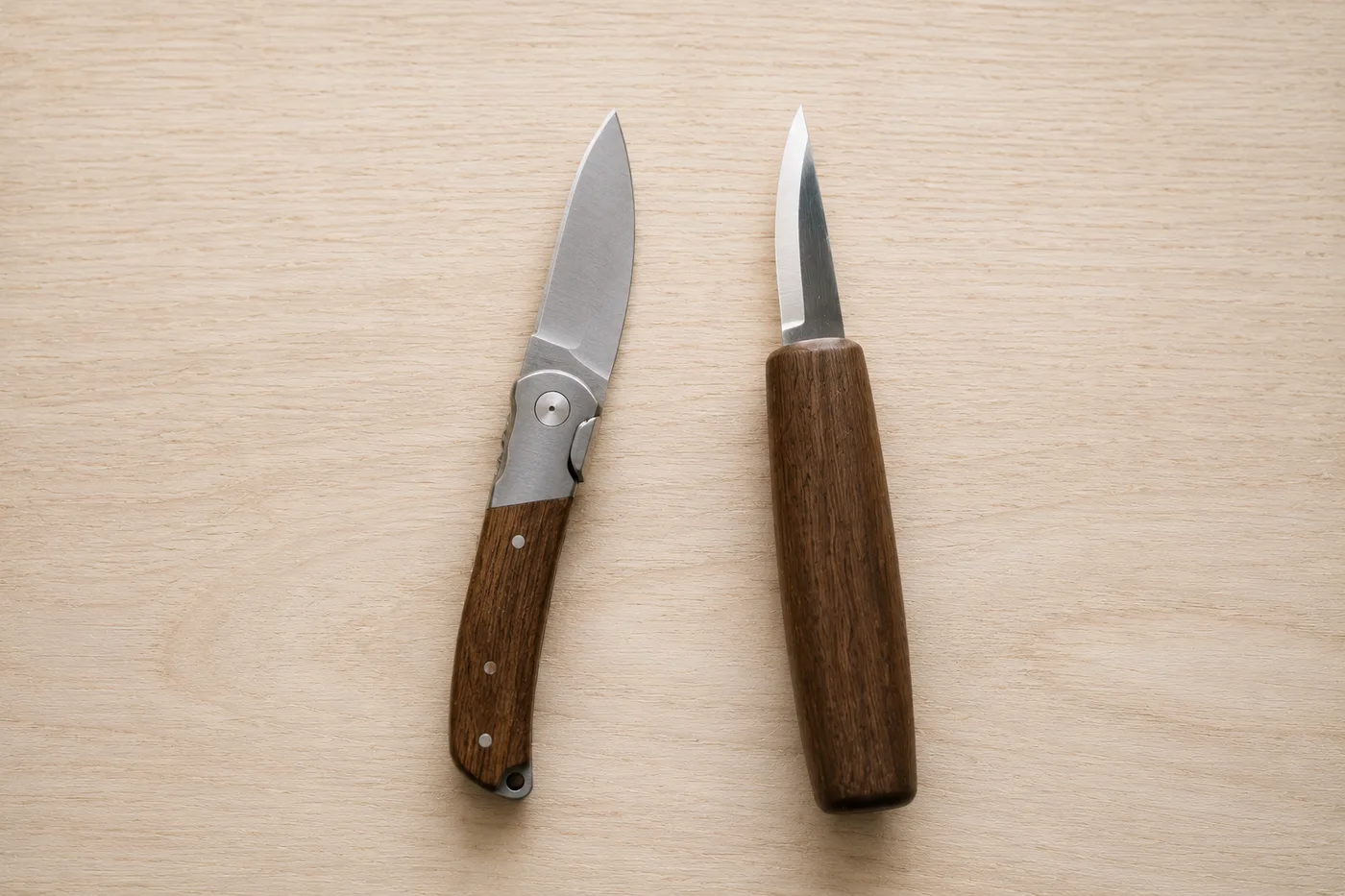
Open the knife you already own and look at it now. Almost everything that decides whether it carves is visible in ten seconds.
| What to check | Carves well | Fights you |
|---|---|---|
| Edge profile | Straight or gently curved: sheepsfoot, wharncliffe, shallow drop point | Deep belly, recurve, serrations |
| Grind | Thin behind the bevel | Thick shoulders that wedge instead of slicing |
| Lock | Seats with a firm click | A slipjoint spring, which holds nothing once the spine is loaded |
| Handle | Flat sided and smooth | Rounded, slick, or sharp jimping that raises blisters |
| Blade length | Short enough to steer | Long blades that lever the tip out of the cut |
None of this calls for a purchase. With a deep belly and thick shoulders you will still finish a pointed stake, just with more effort and a rougher surface. With a straight edge and a thin grind, what stands between you and a carving knife is mostly the handle and the pivot.
The folding pivot is the part that needs a rule
This is not about being nervous. It is about which forces a folding knife was built to take. Slicing loads it correctly. Prying, twisting and levering do not, and those three are what a beginner reaches for when a cut stalls halfway. If a cut stops, take a shallower one.
Before each session, open the knife, check the lock seats fully, then point the edge away from you and press gently on the spine to see whether anything moves. If your folder is a slipjoint with no lock, the rule gets simpler: every cut works along the edge, never anything that pushes the spine toward closed. The rest is ordinary carving discipline. Sit with your elbows braced, keep the holding hand behind the blade's path, wear a cut-resistant glove while you learn, and stop while you still feel steady. These are sharpened tools for adults, or closely supervised teens at most.
Keeping a folding blade sharp enough to slice, not crush
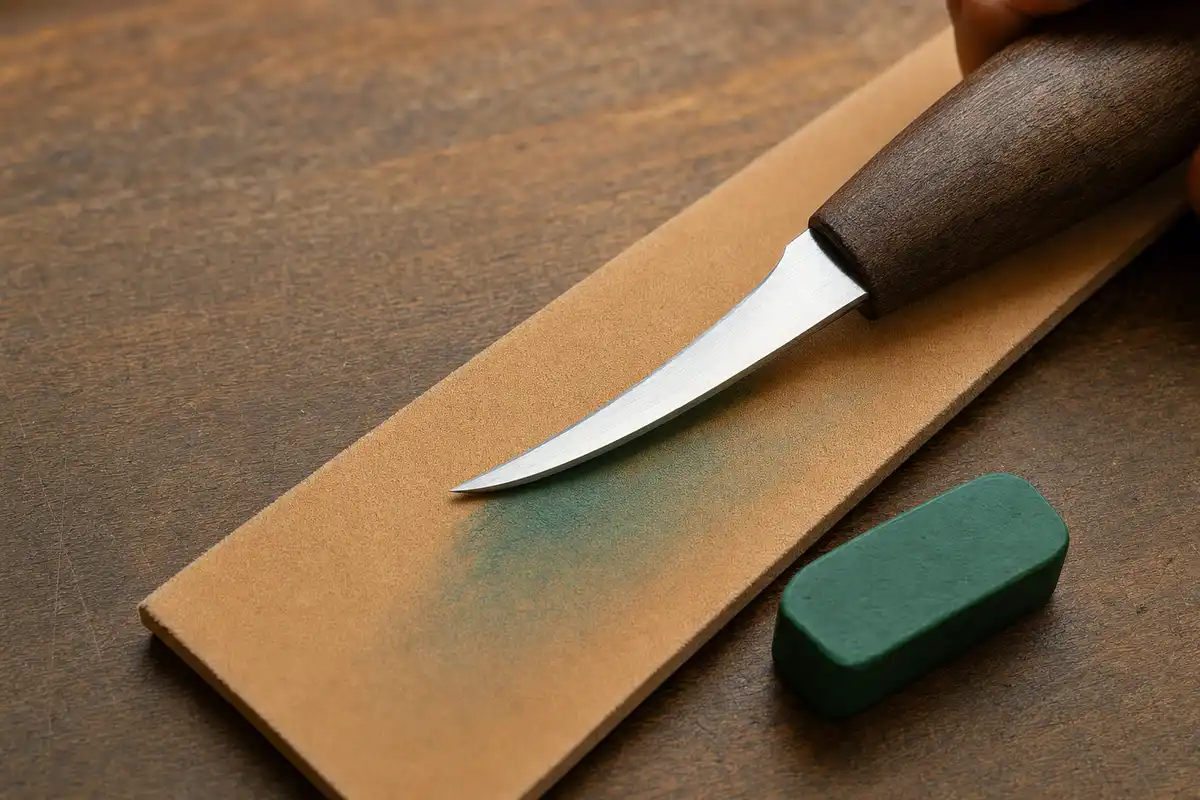
A dull knife is the most common reason a first session ends early, and it is also how people get cut: a blunt edge needs force, force means a bigger push, and a bigger push is what skates off the wood when the blade finally bites. Plan to touch the edge up during a session, not after it.
Two things are specific to folders. Wood dust and sap collect in the pivot, so wipe and dry the joint after carving green or resinous wood, and never put a damp folder away closed. And if stropping stops bringing the edge back, the problem is geometry rather than sharpness: a shoulder too thick behind the bevel has to be thinned on a stone. The full routine is in our sharpening guide, and the strop and green polishing wax ship inside the kit.
Five jobs a pocket knife will not do
This is where the one constraint sits, and it is a limit of shape rather than quality. A more expensive folder leaves four of these five exactly where they are.
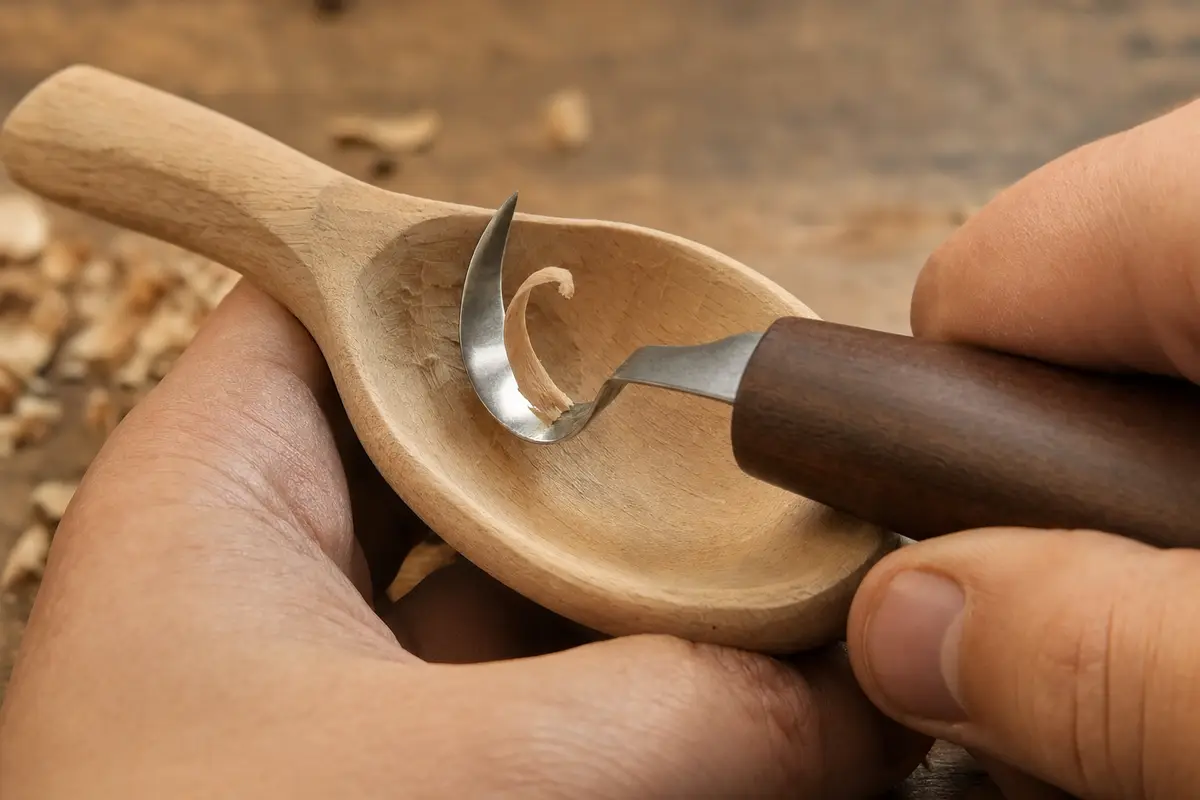
- Hollowing anything. A straight edge bridges a concave surface and touches only at the rim, so it stabs where it should slice. Bowls, cups and scoops need a sweeping curved edge: that is why the hook knife exists.
- Chip carving. Clean triangular chips come from a short, stiff, pointed blade held low. A long folding blade cannot pivot inside the triangle it is cutting.
- Long force cuts. Roughing a blank to shape is sustained pressure, and a rounded pocket knife handle concentrates it into one spot on your palm.
- Tight interior corners. Where two planes of a carving meet you need an angled tip that reaches into the junction. That is the oblique knife's job.
- The finishing pass. The last cuts want a small, low-pressure blade steered with your fingertips, not the one that did the roughing.
Three of those are different blade shapes, not better ones. Our wood carving tools breakdown covers what each is ground to do.
What to carve this weekend with the knife you already own
Basswood is the standard first wood, and pine will do if that is what the scrap bin holds; which species behave is the subject of our best wood for carving guide. For a longer list ranked by difficulty, go to easy whittling projects. Whichever you pick, stop while the piece still looks slightly unfinished: more beginner projects die to one extra cut than to every mistake before it.
When it is worth moving to a dedicated carving knife
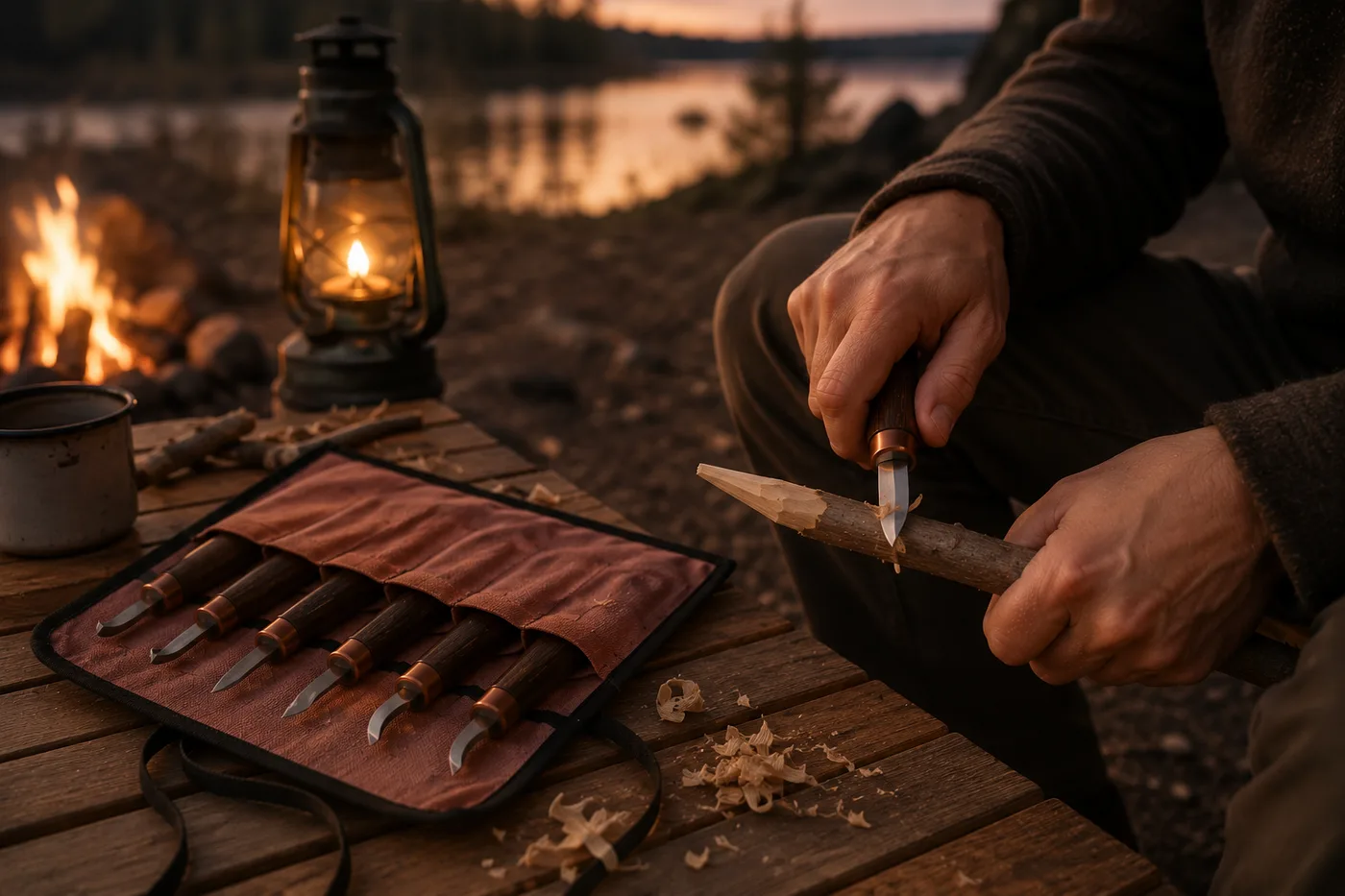
A carving knife is not a better pocket knife. It is a different object: fixed blade with no pivot to flex or clog, ground thin behind the edge, and a handle shaped to be gripped hard for an hour. The CarveKind 8-piece kit puts five of those blades in one roll, sloyd through hook knife, on square black walnut handles whose flats tell your hand where the edge points, with the strop and polishing wax alongside them.
A verified buyer in Korea named the exact thing a folder handle gets wrong: "When cutting wood, the blade is sturdy and the large handle is comfortable for applying force."
The kit is $39.95 with free shipping, most orders arriving in 6 to 10 business days, and a 30-day money-back guarantee. If you only ever whittle sticks, our whittling knife page argues for a single sloyd instead.
Average rating across 192 verified buyer reviews of the CarveKind kit
— CarveKind verified buyer data, 2026
Share of US orders delivered within 11 business days, with free shipping
— Verified delivery data, 2026
Pocket knife carving FAQ
What kind of pocket knife blade carves best?
A straight or gently curved edge with no serrations, ground thin behind the bevel, short enough to steer with your thumb braced behind it. Sheepsfoot, wharncliffe and shallow drop point shapes behave. Deep bellies and recurves fight you, because only a small part of the edge sits flat against the wood.
Can you carve a spoon with a pocket knife?
You can shape the outside, the handle and the neck, but you cannot hollow the bowl. A straight edge bridges a concave surface and touches it only at the rim, so it stabs instead of slicing. Hollowing needs a curved blade, which is what a hook knife is for.
Why does my pocket knife go dull so fast when I carve?
Because carving means hundreds of cuts an hour into wood fibers, which dulls an edge faster than everyday pocket use. Strop before you start, then again whenever the knife needs more push than it did an hour ago. If stropping no longer helps, the bevel needs a stone.
Is carving with a pocket knife safe?
It can be, with two habits. Cut away from your body and keep your holding hand behind the edge, as with any carving knife. Then respect the pivot: check the lock seats fully, never twist the blade inside a cut, never load the spine of a non-locking blade.

Cole Harmon · Hobbyist Woodcarver & Hand-Tool Reviewer, 8 yrs
Cole has spent eight years carving with hand tools — sloyd knives, hook knives, strops and sharpening gear.
Written by Cole Harmon.