Whittling Knife: Why the Sloyd Blade Is the One to Learn On
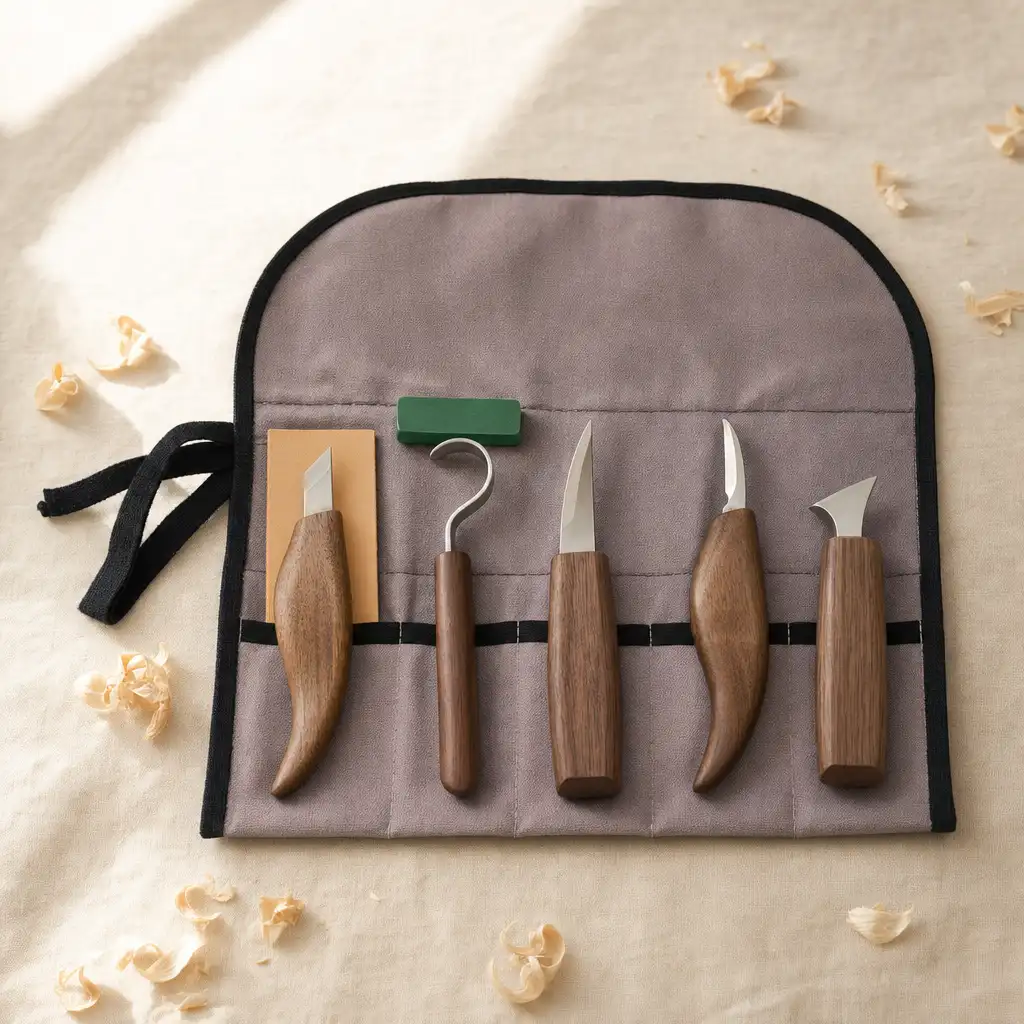
Most people's first whittling knife is whatever folding knife happens to be in a pocket or a kitchen drawer — and most people's first lesson is that it fights them the whole way. This page covers what actually separates whittling from wood carving, what to look for in a knife built for the job, how the sloyd knife in the CarveKind kit earns its spot as the primary blade, and why a complete whittling kit — knife plus strop, wax, and the blades behind it — beats a lone knife for anyone planning to carve more than once.
Whittling vs. wood carving: what's the difference?
| Whittling | Wood carving (broader craft) | |
|---|---|---|
| Tools | One knife, typically sloyd-style | Knives plus hook knives, chisels, gouges |
| Workpiece | Handheld stick or small blank | Often clamped to a bench |
| Typical projects | Figures, animals, walking sticks | Spoons, bowls, relief panels, chip patterns |
| Where you work | Anywhere — porch, campsite, couch | Usually a dedicated work surface |
| From the CarveKind kit | Sloyd + trimming knives, strop | All five blades |
The distinction matters when you're buying, because it tells you what to prioritize. If you only ever whittle, the sloyd knife carries almost the entire workload, and the strop keeps it honest. The moment you want a spoon or a bowl, though, you've crossed into carving territory and need a hook knife for the hollow — no straight blade can do it. That's the quiet argument for a kit over a single knife: you don't have to predict today which side of that line you'll be on next month. Our beginner's guide maps the first few weeks either way.
What makes a good whittling knife
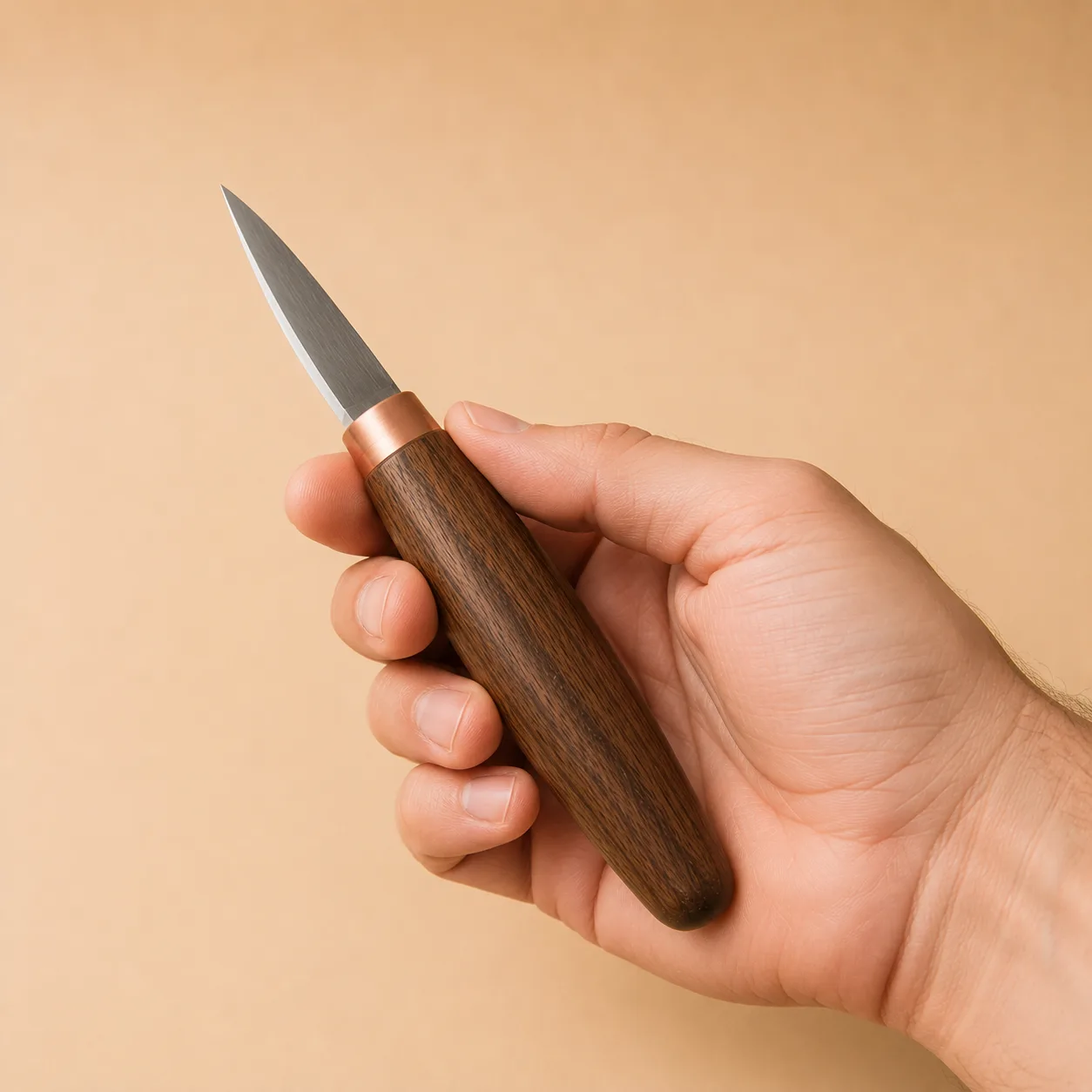
Steel first. Whittling is hundreds of controlled slices per session, so the edge has to survive repeated contact with wood grain and come back quickly on a strop — chrome vanadium alloy steel is used here for exactly that balance. One verified buyer in South Korea described the working feel better than we could: "When cutting wood, the blade is sturdy and the large handle is comfortable for applying force." That second half matters as much as the first. Whittling grips are closed-fist and high-pressure; a slick, rounded pocket-knife handle concentrates that pressure into blisters, while the square-sided black walnut handle spreads it across your palm and tells your hand which way the edge faces without looking. And because the blade is fixed rather than folding, you can bear down on a push cut without a pivot flexing beneath your thumb — the failure mode that makes repurposed pocket knives such tiring whittlers. For the full anatomy of every blade in the set, see the wood carving tools breakdown.
The sloyd knife — and the four blades behind it
| Blade | Role when you're whittling |
|---|---|
| Sloyd knife | The primary knife — roughing out, push cuts, pull cuts, stop cuts |
| Chip carving knife | Incised detail: eyes, feathers, lettering, geometric chips |
| Hook knife | Concave work — spoon bowls and hollowed forms |
| Oblique knife | Tight corners and angled line work the sloyd tip can't reach |
| Trimming knife | Final cleanup passes and delicate edge trimming |
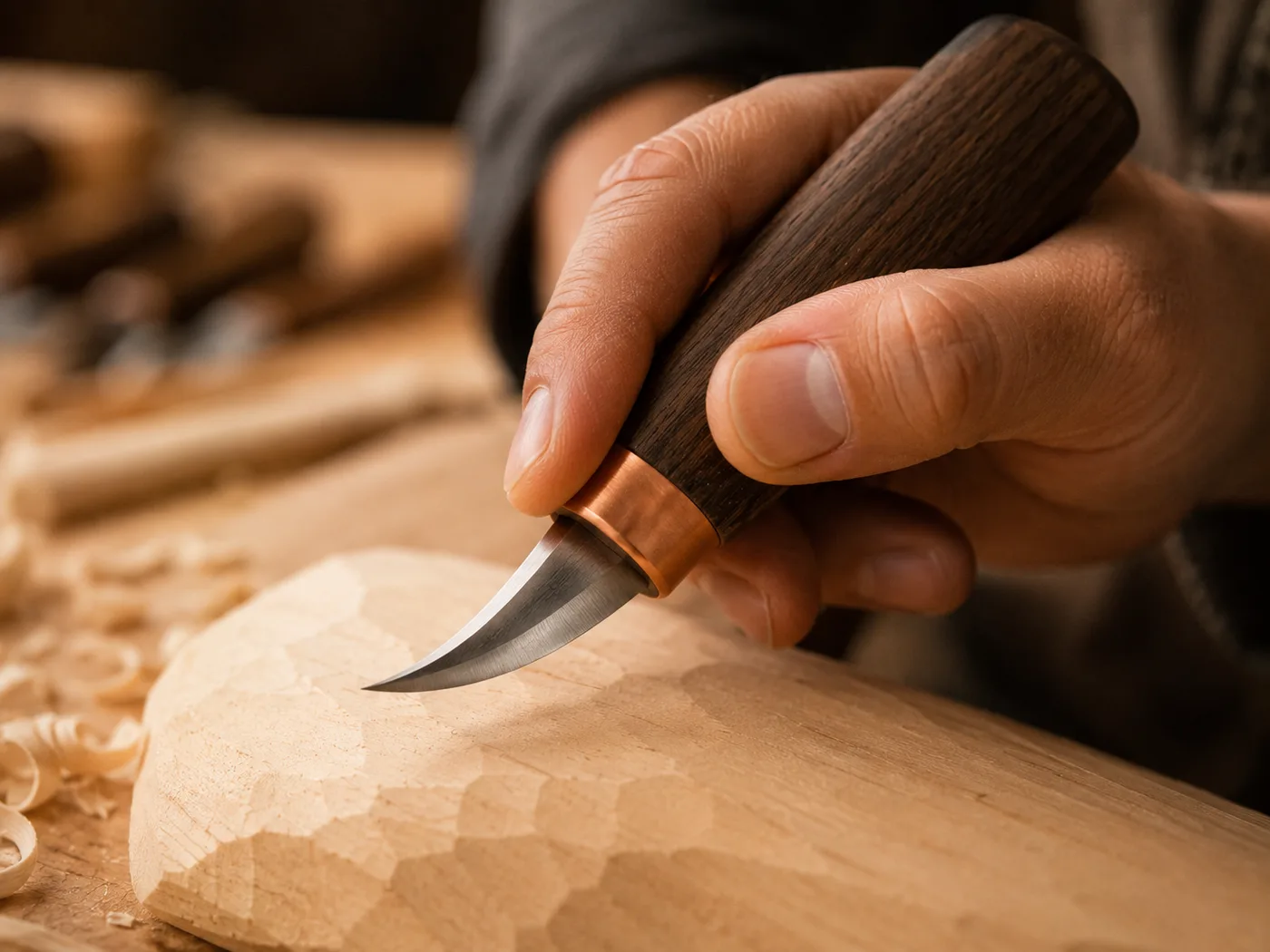
In practice the sloyd stays in your hand for most of a typical project, and the specialty blades come out for the moments that would otherwise ruin it — the eye you'd gouge too deep with a big blade, the bowl you simply cannot hollow with a straight one. If spoons are the goal (they are, for a remarkable share of new carvers), the spoon carving guide shows the sloyd-then-hook sequence on a real blank, and the best wood for carving article will save you from fighting oak on day one.
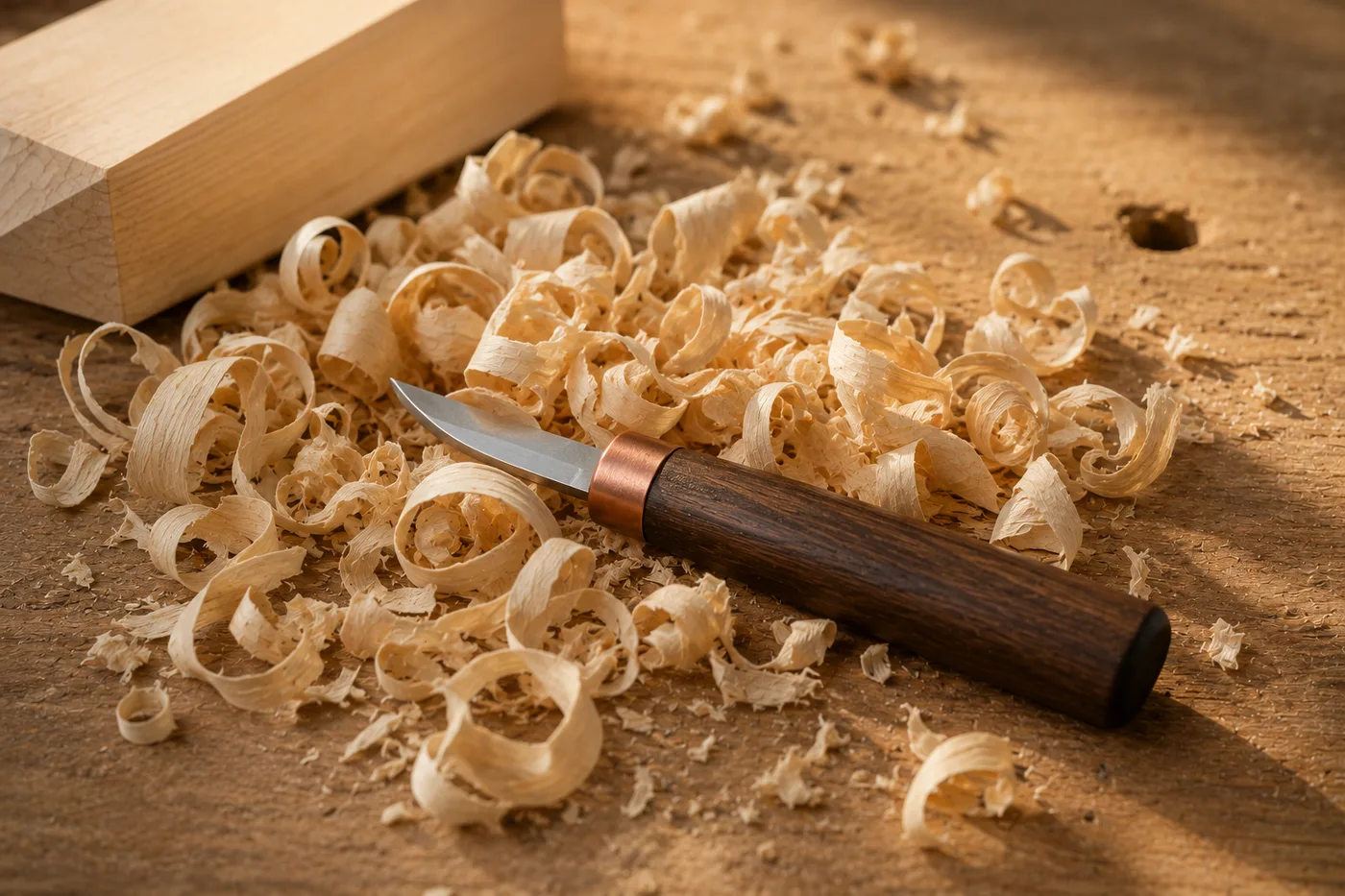
A whittling kit is the knife plus everything that keeps it cutting
An edge dulls with normal, correct use — that's physics, not a defect — and the difference between carvers who enjoy the hobby and those who quit is usually a stropping habit. A few edge-trailing passes on the leather strop, charged with the green compound, before each session keeps every blade at working sharpness more or less indefinitely; the full routine is in our guide to sharpening carving knives. Buyers notice the strop's build, too — a verified buyer in Denmark wrote: "The tools look very nice, blades are made of thick steel. Sharpening leather is multilayer." And the payoff shows up fast: a verified buyer in Brazil reported, "Great product, it arrived and I already made a spoon with a piece of wood that I had saved."
On price: the best-known specialist brand's comparable sets run $50-60. The CarveKind kit is $39.95 — regularly $59.95 — with free shipping, and most orders land within 6-10 business days. If you carve with a friend or want a workshop spare, the 2-pack at $74.95 works out cheaper still per kit.
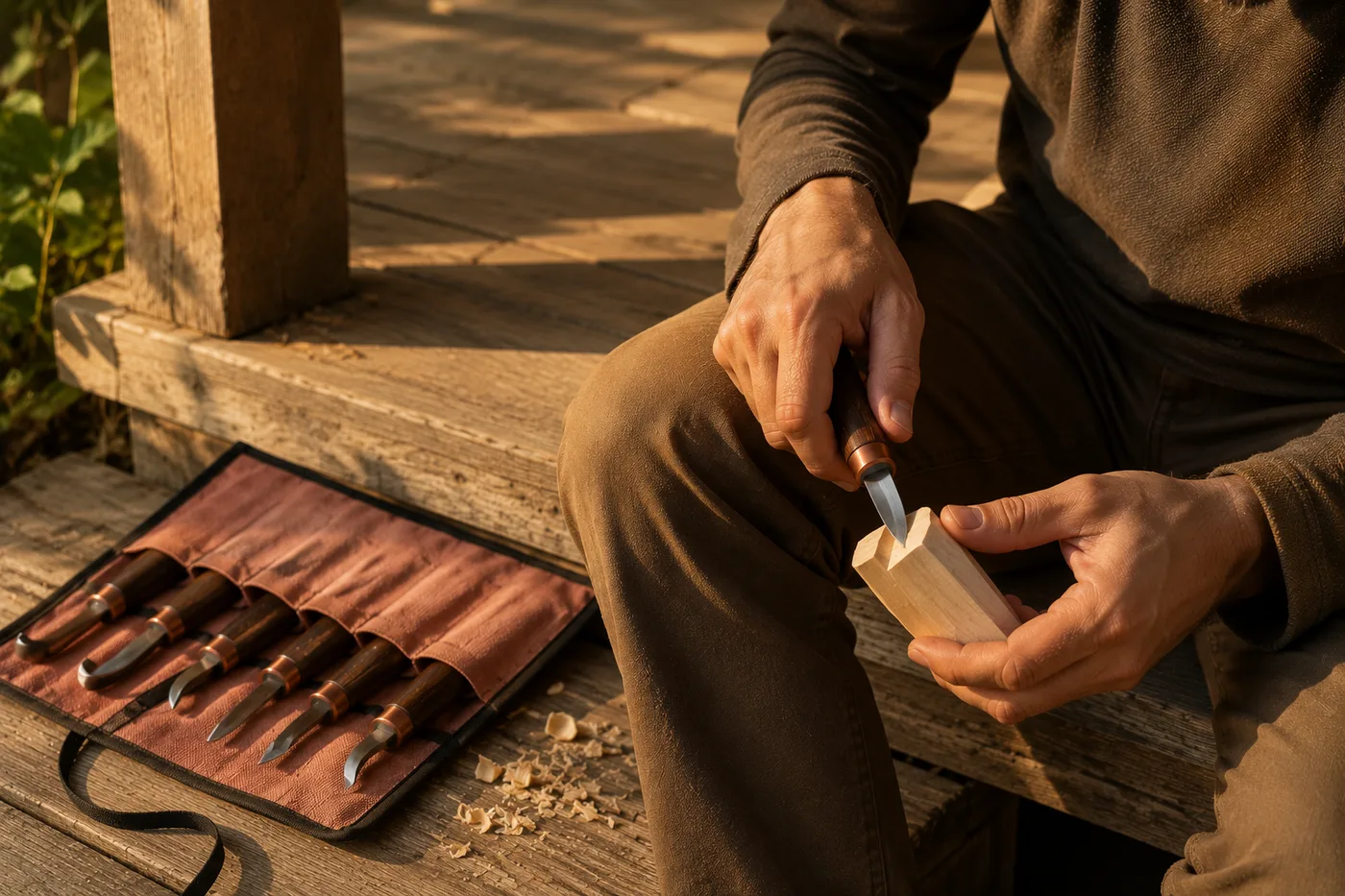
Whittling safety, in plain terms
Those habits cover the overwhelming majority of whittling accidents, and none of them cost anything. Two additions worth making explicit: first, this is not a children's product — sharp fixed blades are adult tools, and supervised teens with an adult actively involved is the absolute floor. Second, open the parcel deliberately when it arrives: confirm each blade guard is seated before you handle anything, and unwrap over a table.
Average rating across 192 verified buyer reviews of the CarveKind kit
— CarveKind verified buyer data, 2026
Share of orders delivered within 11 business days
— Verified delivery data, 2026
Whittling knife FAQ
What is the best knife for whittling?
For most people, a fixed-blade sloyd-style knife: a straight, gently curved edge that handles roughing, push cuts, and pull cuts without folding mechanisms to work loose. The sloyd knife in the CarveKind kit pairs a chrome vanadium alloy steel blade with a square black walnut handle you can grip hard through long sessions, and the included strop keeps the edge keen.
What is the difference between whittling and carving?
Whittling is carving done with a knife alone, usually on a piece of wood held in your hand — think figures, walking sticks, and simple animals shaped one slice at a time. Wood carving is the broader craft: it adds hook knives, chisels, and gouges for hollow forms, relief panels, and chip-carved patterns, often with the workpiece clamped to a bench.
Can I whittle with a pocket knife?
You can, and plenty of people start that way, but the compromises show quickly: a folding pivot can loosen under carving pressure, most pocket-knife handles create hot spots during long grip-heavy sessions, and the steel is rarely chosen for slicing wood. A dedicated fixed-blade whittling knife is safer to bear down on and easier to keep truly sharp.
How do I keep a whittling knife sharp?
Strop it — regularly. Charge the grinding leather with the green polishing wax, then draw the blade along the leather, edge trailing, a handful of passes per side. Done before or after each session, stropping realigns and polishes the edge so you rarely need to regrind. Both the strop and the wax are included in the CarveKind 8-piece kit.
Related pages
The full product story — pricing, buyer photos, specs — lives on our wood carving knife homepage. To see everything the 8-piece set includes and how it compares to buying tools separately, read the wood carving kit page. When you're ready to make something, start with the easy whittling projects list — each one is doable with the sloyd blade alone.