· Cole Harmon
How to Sharpen a Wood Carving Knife (the Stropping Guide)
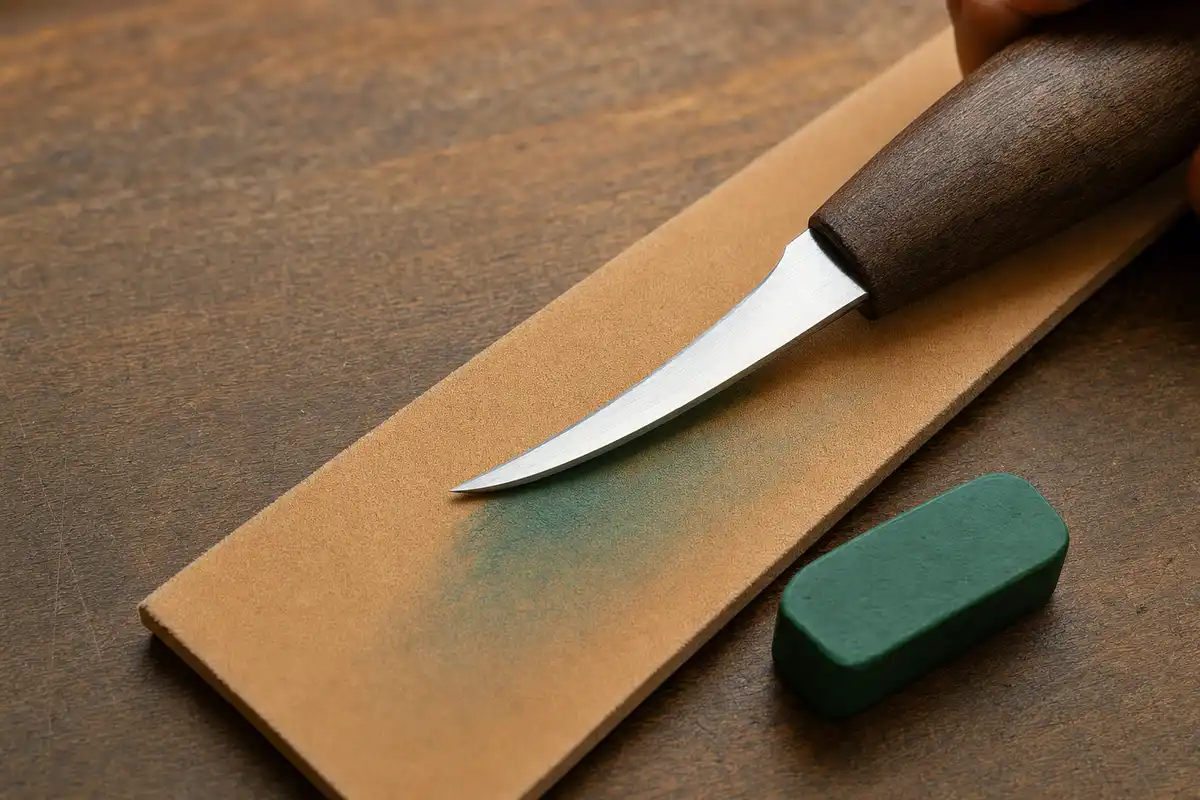
Here's the thing nobody tells beginners: wood carving knife sharpening is mostly not sharpening at all — it's maintenance. A carving edge doesn't go from sharp to dull in one session; it slowly loses its polish and alignment. Catch it early with a strop and you may not touch a sharpening stone for months. This guide covers the stropping routine I use on every knife in my roll bag, why it works, and the mistakes that quietly make an edge worse.
Strop vs. sharpening stone: which one do you need?
| Leather strop | Sharpening stone | |
|---|---|---|
| What it does | Realigns and polishes the existing edge | Grinds away steel to form a new edge |
| When to use | Routine touch-ups, during and between sessions | Chips, rolled edges, long-neglected blades |
| How often | Constantly — it takes a minute | Rarely, if you strop regularly |
| Risk to the blade | Very low | Can ruin the bevel if done badly |
This is why a serious carving kit ships with a strop and compound rather than a stone: for a knife that arrives sharp, the strop is the only tool you need for a long time. The CarveKind kit includes both — a grinding leather and the green polishing wax — alongside the five chrome vanadium blades. A verified buyer in Denmark noted the strop specifically: "The tools look very nice, blades are made of thick steel. Sharpening leather is multilayer."
Step 1: Load the leather with compound
A bare strop does very little — the polishing wax is the actual abrasive, and the leather is just the backing that holds it. Rub the compound block across the rough face of the leather like a crayon until you see a thin, even layer of green. You don't need much; a light coat that colors the surface is enough. Re-load whenever the leather starts looking dark and glazed instead of green.
Step 2: Keep the factory bevel flat on the leather
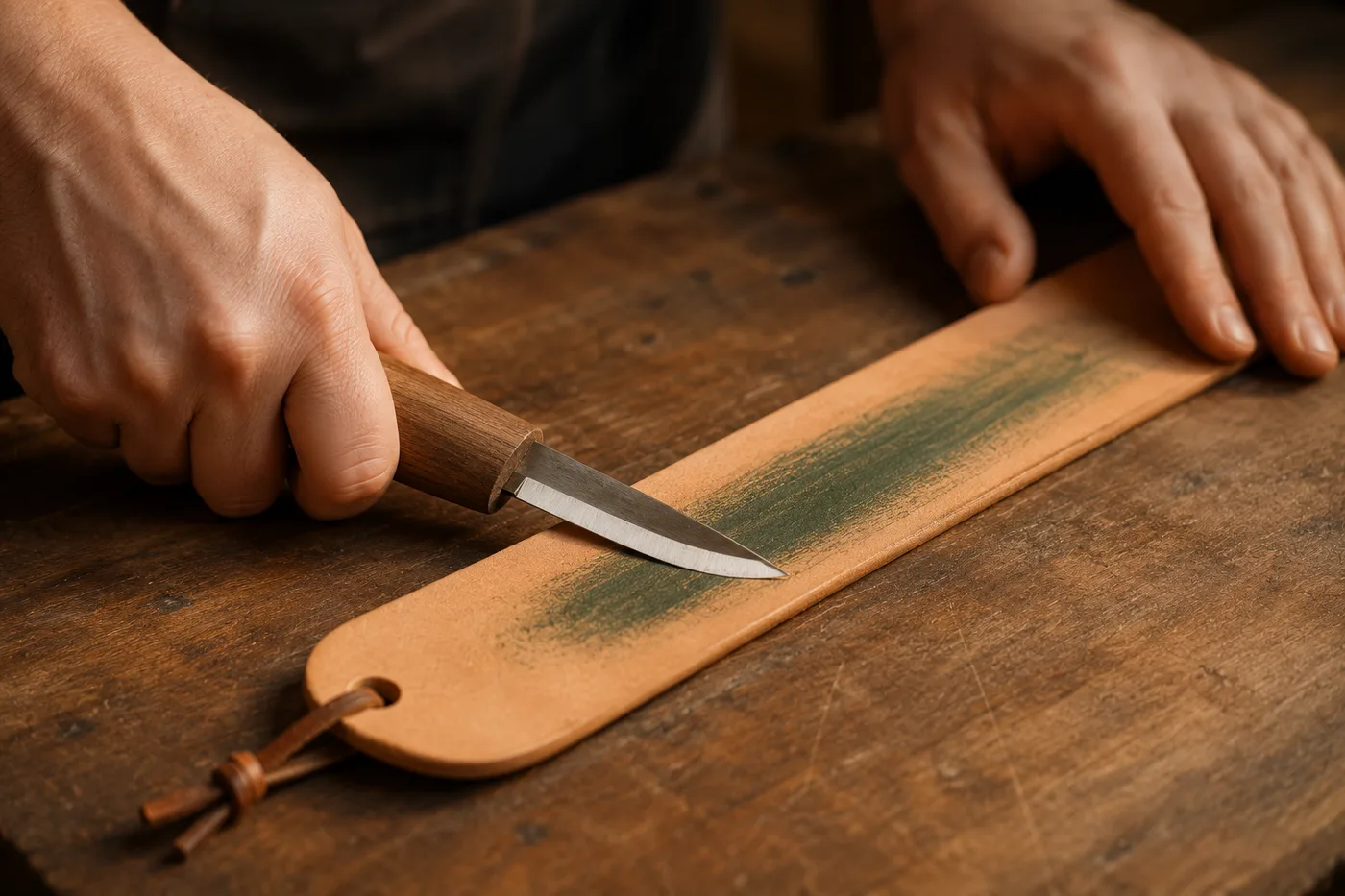
Lay the blade on the strop so the bevel — the ground surface that leads to the edge — sits flat against the leather. Don't measure or guess at degrees; the correct angle is the one already ground into the blade. Maintain the factory bevel angle and you'll polish the edge; lift the spine higher and you'll round the edge over instead. If you're unsure, lay the blade flat and tilt it up just until the bevel makes full contact. Flat and consistent beats steep and enthusiastic every time.
Step 3: Pull, never push
This is the one rule that makes stropping different from every other sharpening motion. On a stone you can work in circles or push into the edge; on leather, the edge must always trail. Keep the pressure light — the compound does the cutting, not your arm — and keep the angle identical on every stroke. A couple dozen alternating passes per side is a typical touch-up; stop and test rather than counting religiously.
For the curved hook knife, the flat-strop motion doesn't reach the inside of the curve. A common approach among carvers is to work the outside bevel on the flat leather in sections, rolling the blade through the stroke, and to polish the inside with compound on a rounded edge of the strop or a leather-wrapped dowel.
Step 4: Know when to strop
Don't wait for the knife to feel dull. Stropping for a minute after every 20–30 minutes of carving is common practice among carvers — it keeps the edge at its best constantly instead of letting it decay and then trying to rescue it. The signs it's overdue: cuts need noticeably more force, the surface starts looking scratched or fuzzy instead of glossy, and end grain crushes instead of slicing. If you carved through a session for our spoon carving guide, your hook knife is due right now.
average rating across 192 verified buyer reviews — 'arrived nice and sharp' is a recurring theme
— CarveKind verified buyer data, 2026
Common stropping mistakes
- Rounding the edge. Lifting the spine a little more on each stroke slowly convexes the edge until it won't bite. Fix: set the bevel flat, keep your wrist locked.
- Too much pressure. Pressing hard flexes the leather around the edge — which also rounds it. Light strokes, more of them.
- Stropping a damaged edge forever. No amount of leather fixes a chip. If stropping stops helping, the blade needs a stone, then the strop to finish.
- Bare leather. Without compound you're mostly warming the blade. Load the wax first.
- Edge-leading strokes. You'll cut the strop and blunt the knife in one motion. Spine leads, always.
- Skipping it because the knife is new. Even a fresh edge benefits after a session or two — that's exactly why the kit ships the strop in the same roll bag as the blades.
Safety while sharpening
Strop on a stable surface with the leather anchored, keep your free hand out of the stroke path, and check blades when the kit first arrives — edge guards can shift in shipping, so unpack deliberately, handling each knife by the walnut handle. The same discipline from carving basics applies at the bench: sharp tools are safer than dull ones, but only if your hands stay behind the edge.
Frequently asked questions
How often should carving knives be sharpened on a stone?
If you strop regularly, rarely — many carvers go months without a stone. The stone comes out when the edge is chipped or when stropping no longer restores clean cutting.
Do all five blades in the kit strop the same way?
The flat blades — sloyd, chip, oblique, and trimming — all follow the exact routine above. The hook knife adds the curved-blade variation: outside bevel in rolling sections, inside with compound on a rounded surface. One strop and one wax block serve all five.
Can I use the same strop for a whittling knife?
Yes — a whittling knife is maintained exactly like a sloyd. Same compound, same edge-trailing strokes, same flat bevel rule.
What compound does the CarveKind kit include?
A green polishing wax, the standard fine compound carvers use for edge maintenance, plus the multilayer leather strop to load it on. Buyers can see both in the kit photos on our reviews page.
of US orders arrived within 11 business days — strop, wax, and all five blades in one box
— Verified delivery data, 2026
A sharp knife is the difference between carving and fighting the wood. The CarveKind 8-piece kit ships with everything this guide uses — five blades, the multilayer strop, and the polishing wax — so the maintenance habit starts on day one.

Cole Harmon · Hobbyist Woodcarver & Hand-Tool Reviewer, 8 yrs
Cole has spent eight years carving with hand tools — sloyd knives, hook knives, strops and sharpening gear.