Wood Carving Tools: What Each Knife in the Kit Actually Does
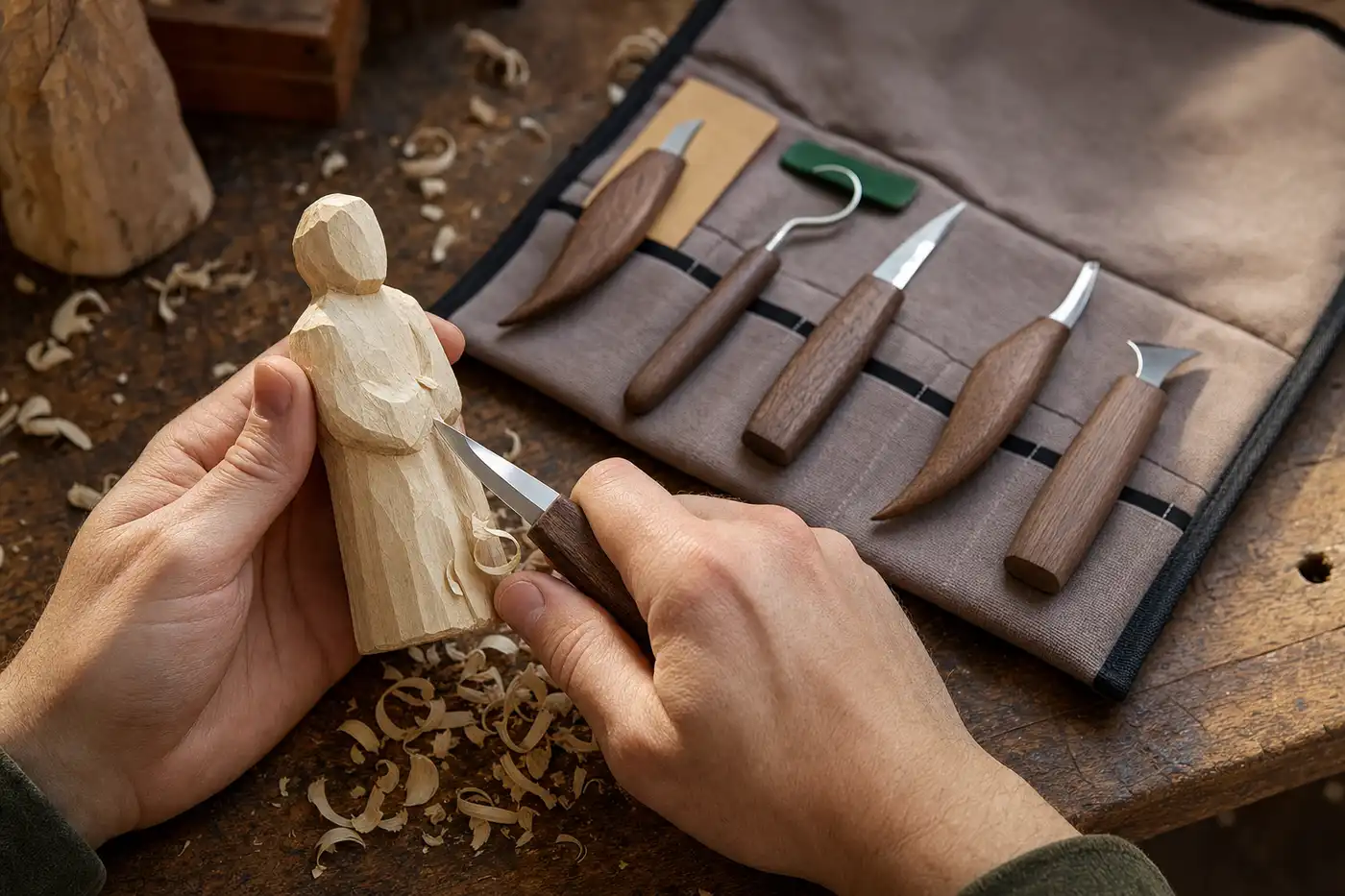
Search for wood carving tools and you get walls of individual knives with no explanation of which one does what — which is how beginners end up owning three knives that all do the same job and none that hollow a spoon. This page walks through the five blade types in the CarveKind carving kit one at a time: what each knife is shaped for, the cuts it makes that the others can't, and which projects call for it. If you're brand new to the hobby and want the single-knife version of this conversation first, start with our whittling knife page, then come back here when you're ready to see the full toolkit.
The five carving knives at a glance
| Tool | Blade character | What it's for | Typical first project |
|---|---|---|---|
| Sloyd knife | Straight, general-purpose edge | Roughing out, whittling, long shaping cuts | A simple whittled figure |
| Chip carving knife | Short blade, held low in the hand | Geometric patterns, borders, lettering chips | A chip-carved coaster border |
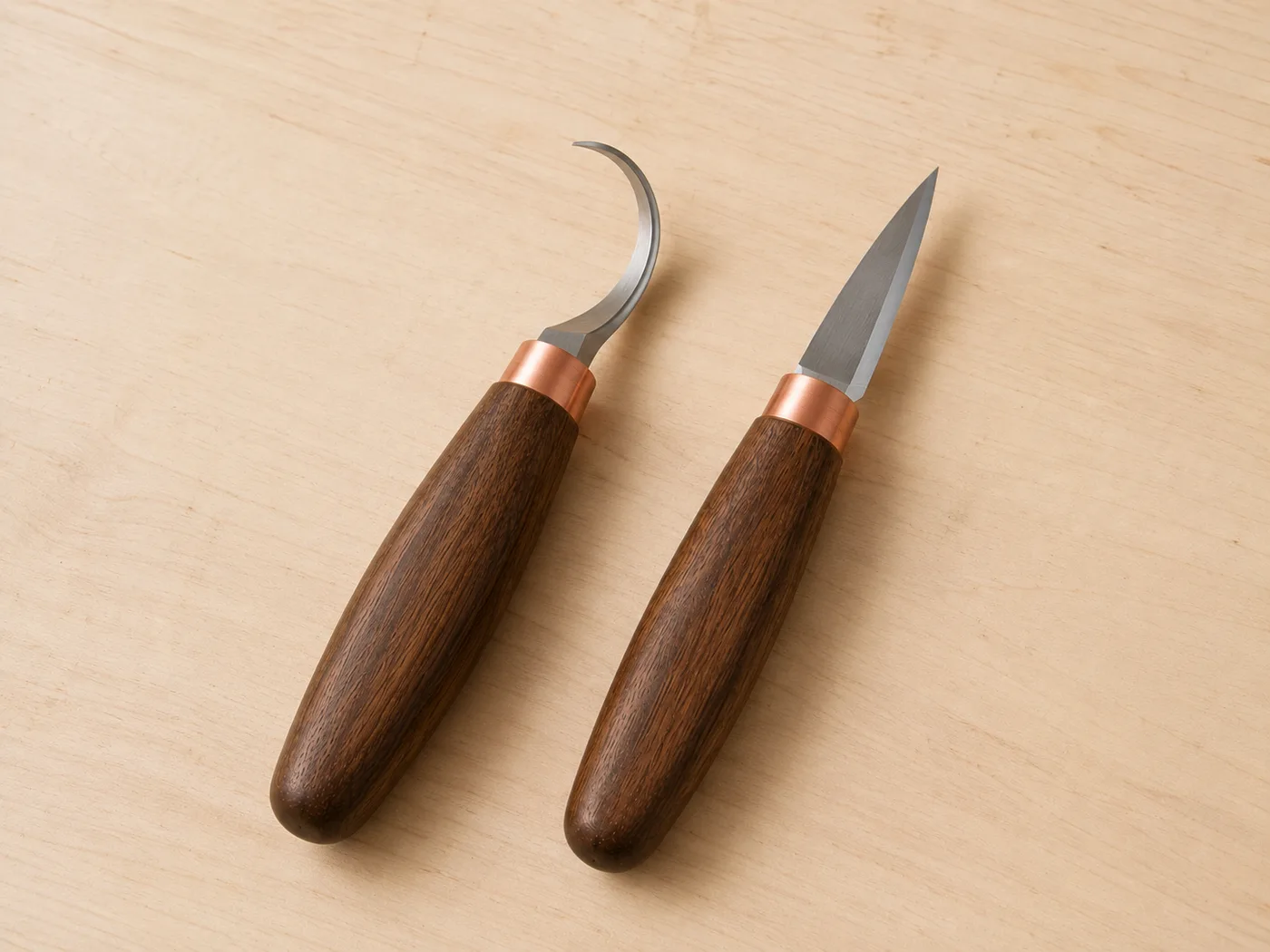
| Hook knife | Curved, sweeping edge | Hollowing spoons, kuksa cups, small bowls | Your first carved spoon |
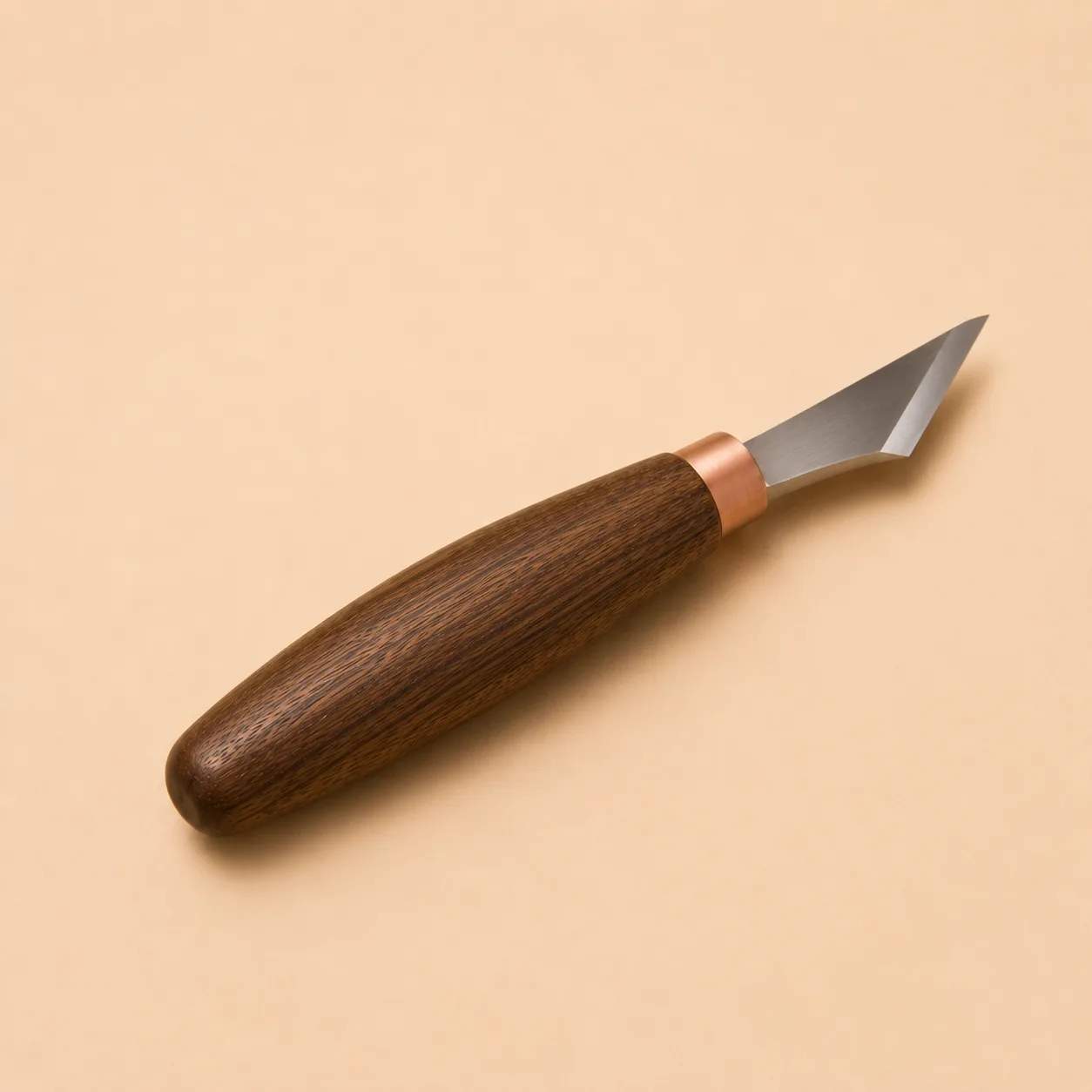
| Oblique knife | Angled cutting edge | Precise lines, corners, angled detail cuts | Incised line decoration |
| Trimming knife | Compact fine-work edge | Cleanup passes, smoothing facets, final details | Finishing any of the above |
All five run chrome vanadium alloy steel blades on square black walnut handles, and the whole set rolls up into the included canvas bag. None of these are exotic tools — they're the standard vocabulary of hand carving. What the kit does is put the full vocabulary in one place, sharp out of the box, for $39.95 instead of five separate purchases.
The five knives, one by one
1. Sloyd knife — the one you'll use on every project
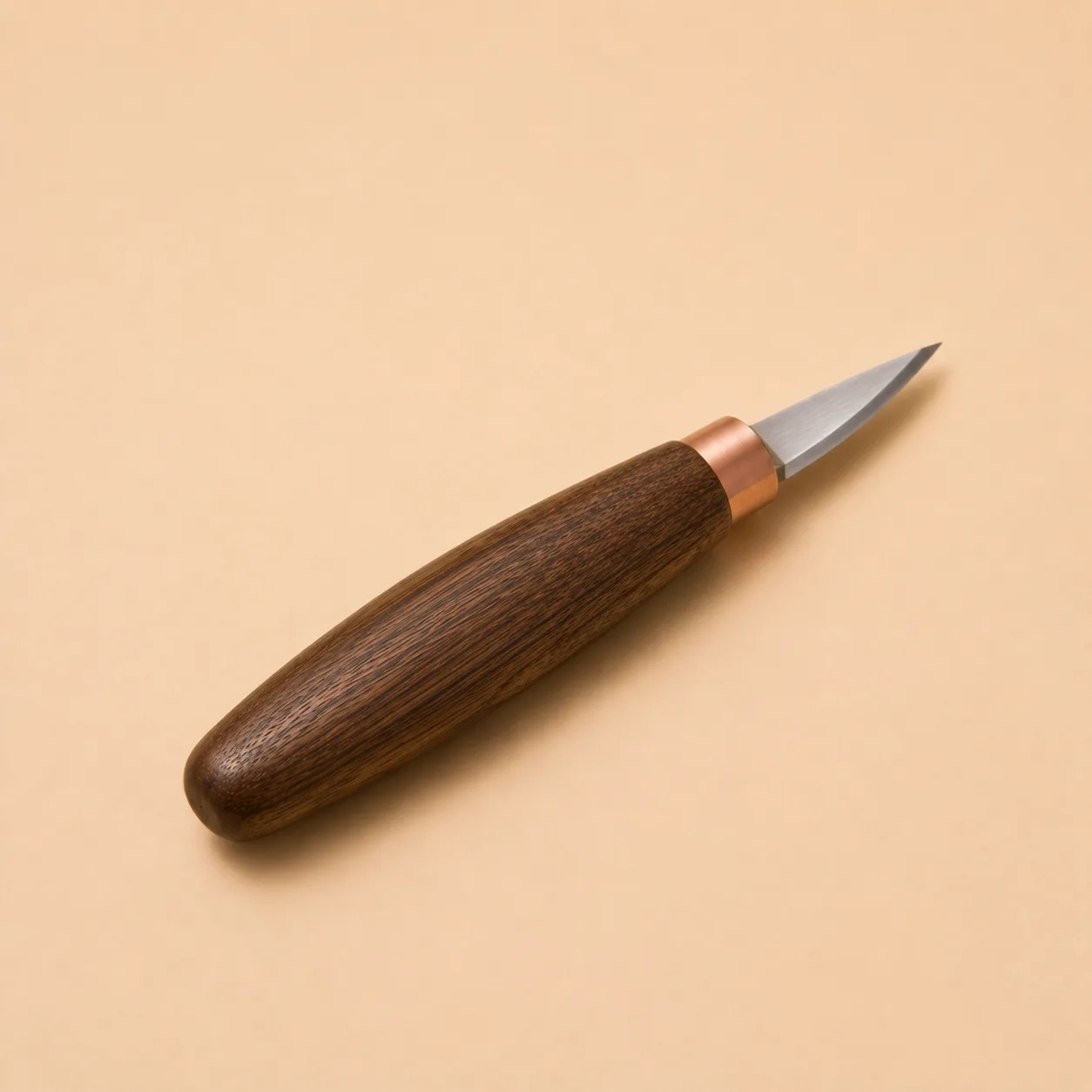
The sloyd is the general-purpose carving knife: a straight edge that handles roughing a blank down to shape, long slicing cuts along the grain, and the bulk of any whittling project. If you carve for an hour, most of that hour is usually spent with the sloyd. It's the tool our beginner's guide to wood carving builds its first exercises around, and the one that the easy whittling projects on our blog lean on most. A verified buyer from Korea summed up why handle shape matters here: "When cutting wood, the blade is sturdy and the large handle is comfortable for applying force." Roughing cuts are force cuts — a comfortable grip is not a luxury.
2. Chip carving knife — patterns, not shapes
Chip carving is its own discipline: instead of shaping an object, you slice small, precise chips out of a flat surface to build geometric patterns — rosettes, borders, lattice work, lettering. The chip carving knife is built for that slicing action, held low in the hand with the edge working at a shallow angle to the surface. You can't rough out a figure with it, and you shouldn't try; its job is decoration, and at decoration it's the only knife in the kit that feels right.
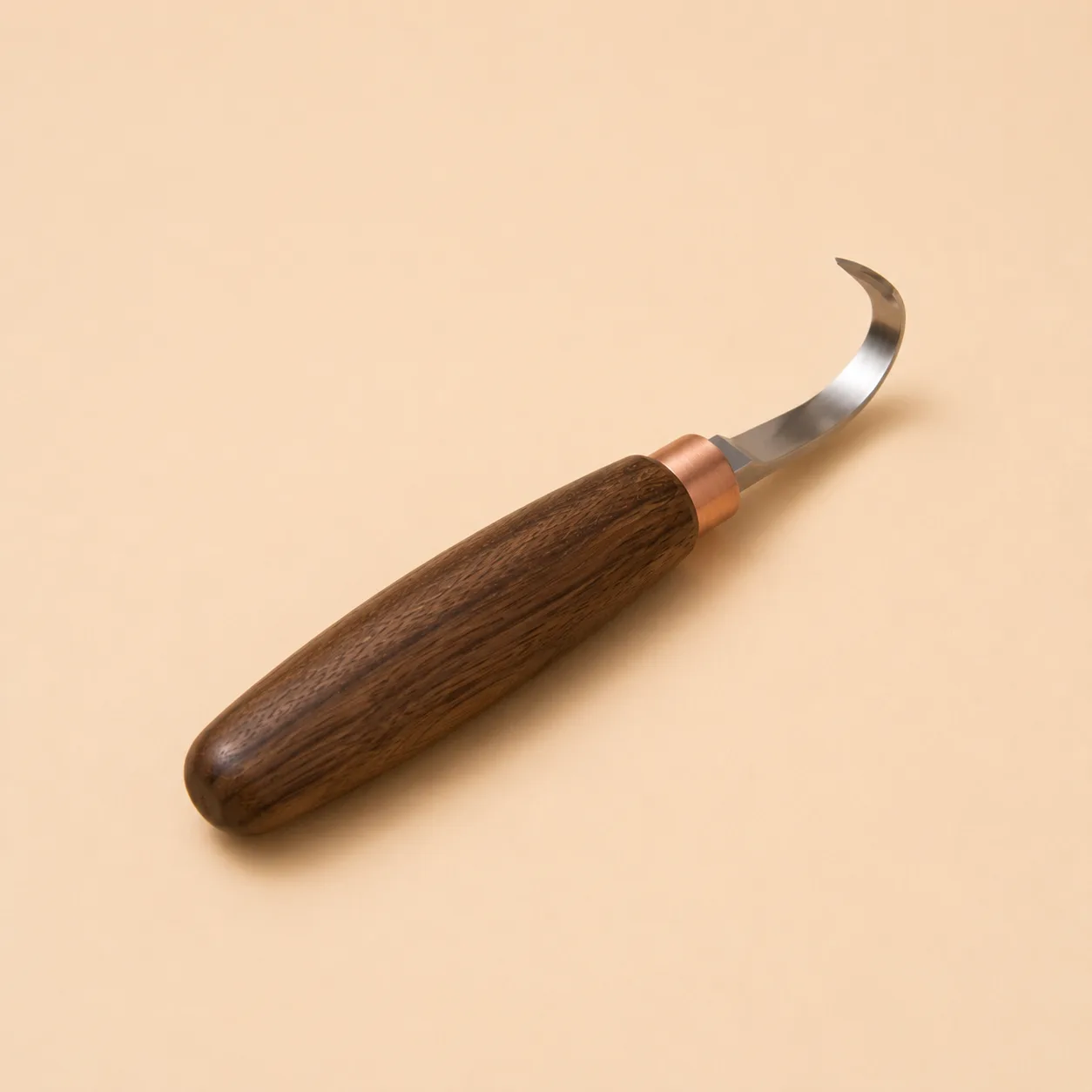
3. Hook knife — the only blade that can hollow
Every other knife in the kit cuts convex or flat surfaces. The hook knife is the one that cuts concave: the bowl of a spoon, the cup of a kuksa, the inside of a small dish. Its curved edge sweeps through a hollow in a way a straight blade physically cannot. This tool gets a full page of its own — see our hook knife guide for the technique, and the spoon carving guide on the blog for a complete first-spoon walkthrough.
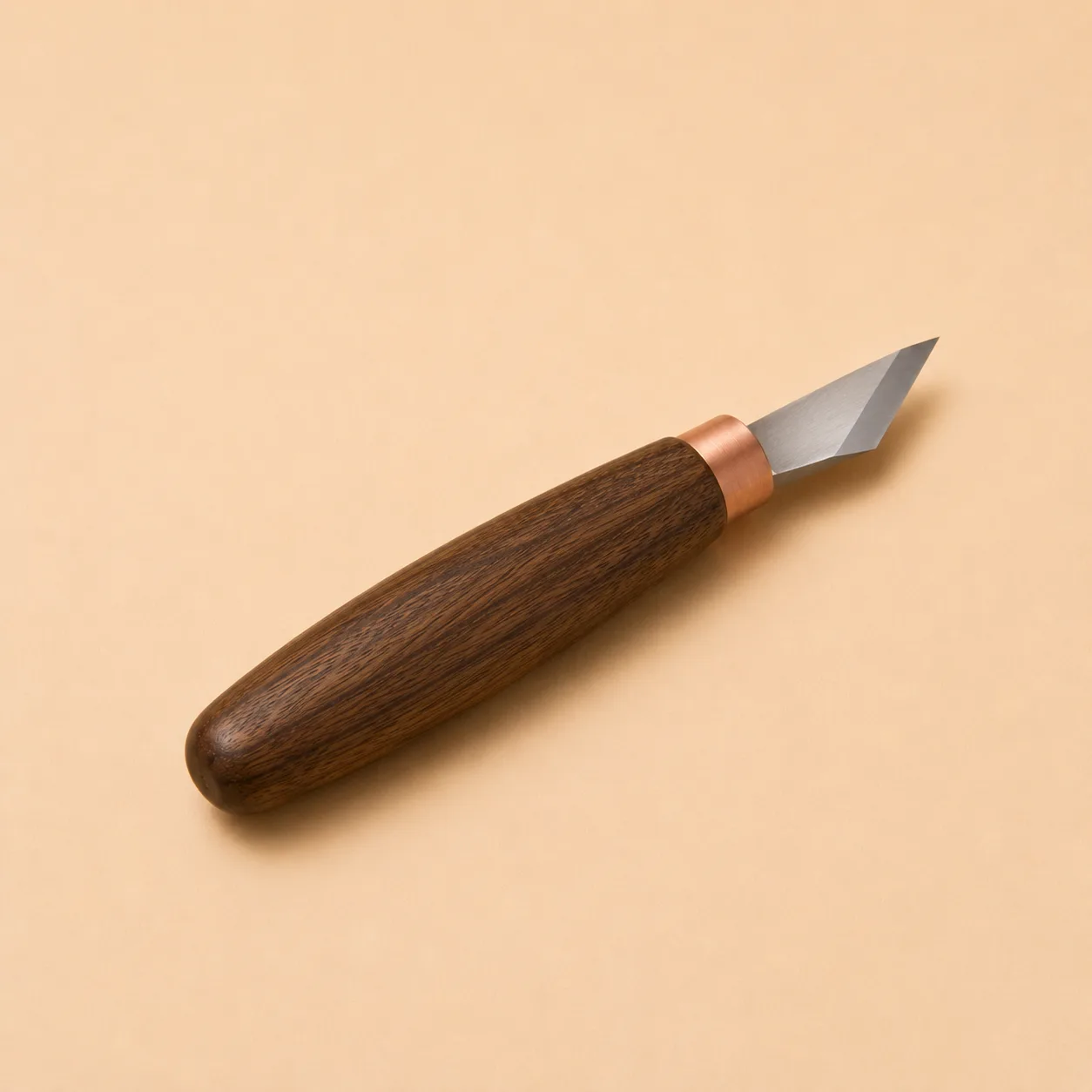
4. Oblique knife — precision lines and angles
The oblique knife carries its edge at an angle, which lets the tip reach into corners and track long, straight, controlled lines — think incised decoration, crisp outlines around a pattern, or cleaning the junction where two planes of a carving meet. Where the sloyd removes wood in volume, the oblique defines edges. Carvers coming from flat illustration or leatherwork tend to adopt this one fastest, because it behaves like a drawing tool.
5. Trimming knife — the finishing pass
The trimming knife is the small, fine-work blade you pick up last: shaving off facet ridges, softening a corner, cleaning up fuzz around a detail, taking the final whisper-thin passes that decide whether a carving looks finished or almost-finished. It overlaps a little with the oblique on detail work, but its compact edge makes it the more forgiving of the two for delicate, low-pressure cuts.
The other three pieces: strop, polishing wax, roll bag
A carving knife is only as good as its edge, and edges dull with use — slowly with clean cuts in soft wood, faster with force cuts. The included grinding leather and polishing wax handle routine upkeep: a minute of stropping realigns and polishes the edge without grinding away steel. One Danish buyer called out the strop specifically in their review: "Sharpening leather is multilayer." The full routine is on the leather strop and compound page, and the blog's guide to sharpening wood carving knives goes deeper on when a strop is enough and when it isn't.
Which tools for which projects
In practice, projects use the knives in combinations. A whittled figure is sloyd for the body, trimming knife for the face and final cleanup. A spoon is sloyd to rough the blank and shape the handle, hook knife to hollow the bowl, trimming knife to refine the rim. A decorated box lid is chip carving knife for the pattern and oblique for the border lines. A kuksa is the spoon workflow scaled up. The wood matters as much as the tool — soft, straight-grained species behave very differently under the same blade, which is why our best wood for carving guide pairs each species with the cut it takes best.
One kit versus buying tools separately
You can absolutely assemble this toolkit piecemeal — a sloyd here, a hook knife there, a strop from a third shop. The argument for the kit is simpler than a spec sheet: every tool above, plus the sharpening gear, plus the canvas roll bag that keeps edges from banging together in a drawer, is included in the CarveKind 8-piece kit — no need to buy anything separately. It's $39.95 against a $59.95 compare price, ships free in 6–10 business days, and carries a 30-day money-back guarantee. A verified Canadian buyer's one-line review covers the unboxing experience: "Very sharp. Steel seems good quality. Nice quality handles. Comes in a nice case." The buyer photos on our reviews page show exactly what arrives.
Carving safety, briefly but seriously
Always cut away from your body — every carving technique is built on that rule. Keep your free hand behind the cutting edge, not in its path, and consider a carving glove for the hand holding the wood while you're learning. A sharp, freshly stropped blade is genuinely safer than a dull one, because it cuts where you point it instead of skating. And these are edge tools, not toys: they belong in adult hands, or with closely supervised teens at most.
Average rating across 192 verified buyers of the CarveKind 8-piece kit
— CarveKind verified buyer data, 2026
CarveKind carving kits sold to date
— CarveKind sales data, 2026
Wood carving tools FAQ
What wood carving tools does a beginner actually need?
A general-purpose carving knife — a sloyd — and a way to keep it sharp will cover most first projects. Add a hook knife when you want to carve spoons or bowls, and a chip carving or detail knife when you move into patterns. The CarveKind 8-piece kit includes all five knife types plus a leather strop and polishing wax, so nothing needs to be bought separately.
What is the difference between a sloyd knife and a whittling knife?
"Whittling knife" is a broad term for any straight-bladed knife used to shave wood by hand; a sloyd knife is a specific Scandinavian general-purpose pattern that most carvers treat as their default whittling tool. In practice the sloyd in the CarveKind kit is the knife buyers reach for first on almost every project.
Do I need a hook knife if I never carve spoons?
Not on day one. But any concave shape — a spoon bowl, a kuksa cup, a small dish, a scooped detail — is effectively impossible with a straight blade, so most carvers add a hook knife within their first few months. Since one is already included in the CarveKind kit, you are covered the day the idea strikes.
What steel are the CarveKind blades made from?
All five blades are chrome vanadium alloy steel, paired with square black walnut handles. One verified buyer from Denmark described them directly: "blades are made of thick steel." The included leather strop and polishing wax are there to maintain that edge between projects.
Related pages
The full kit — prices, buyer photos, and specs — lives on the wood carving knife homepage. For deeper dives on individual tools, see the hook knife and leather strop pages. New to the hobby entirely? The beginner's carving guide and easy whittling projects linked above are the natural starting points.